Love it or not, you already know the reputation: when it comes to pure driving pleasure, nothing quite matches the Miata. Across four generations and more than three and a half decades, Mazda has tweaked the formula countless times, yet the core experience has never wavered. So if you're finally ready to see what the hype is about, how do you pick the right one?
That's not a simple question to answer. If this charming little roadster has caught your interest but you're stuck on which generation suits you, it helps to dig into the finer points—the character, the quirks, the details—that separate one from another. This isn't about crowning a "best" Miata; that call is entirely yours to make. Instead, the aim here is to spotlight the traits worth knowing about in each generation, plus the trims and options that stand out as more or less worthwhile. Heads up: we're about to get pretty detailed, so if you just want the big picture first, check out the overview links for the NA, NB, NC, and ND.
The best place to begin is by figuring out what matters most to you. If all you're after is a dependable little convertible without any interest in pushing it near its handling limits, a base model from whichever generation appeals to you—skip the performance extras—will do just fine. Looking to turn heads at a Radwood meet? Track down a black-over-red '93 Limited Edition; good luck finding one, but nothing beats it for presence. Or maybe your priority is a Miata that works equally well as a daily driver and a weekend toy—in that case, start your search with NC models equipped with the Power Retractable Hard Top (PRHT). The takeaway: with so many variations out there, knowing what you actually want makes all the difference. Once you've settled on a generation, you can start narrowing things down by trim and package. And don't forget—this car and its community are built around modifying and upgrading, so dialing in your ideal setup is never far out of reach.
NA (1990–97): The Purest
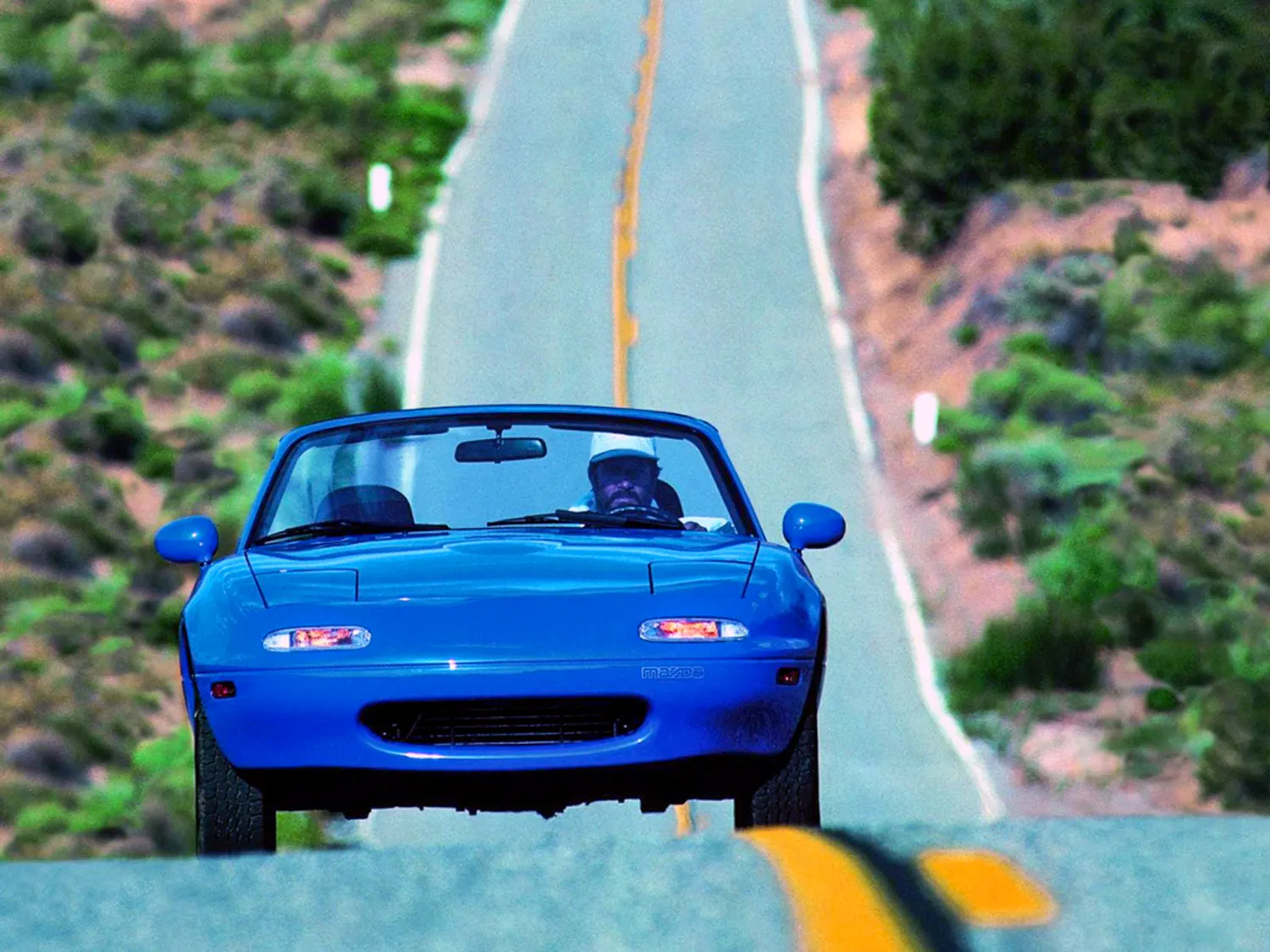
Overview
If what you want is the Miata in its purest form—the version that hews closest to the classic British roadsters that inspired it in the first place—the original generation is where you should look first. These are the most stripped-down examples, generally the lightest of the bunch (particularly those built between 1990 and 1993), and their looks only grow more charmingly nostalgic with each passing year. Not to mention those pop-up headlights.
It's genuinely hard to resist leaning on the usual clichés about the Miata, or piling on with yet another love letter to it. But it needs saying: the first-generation car, in particular, earns its place alongside icons like the MGB, Mustang, Corvette, BMW 2002, 240Z, and 911—the kind of car that defines its category and belongs on everyone's must-drive list. Everything you've heard about how good it feels to drive one is entirely accurate. Just five minutes at the wheel delivers a sense of purpose that very few other cars can offer. That's true across every generation the Miata has seen, but the NA holds a particularly special place in sports car history, thanks to its role as the breakout, trailblazing car that kicked off the convertible revival of the 1990s.
Here's a reworded version:
Being the closest modern equivalent to the classic British roadster comes with a few characteristics worth mentioning, ones that tend to get overlooked amid all the (well-deserved) praise. Like many of the affordable convertibles that served as its inspiration, the NA Miata's engine was never really the selling point—it does the job and sounds decent enough, but it's not the star of the show the way, say, the engine in Honda's S2000 is. The chassis flexes more than you'd expect from a modern car, particularly on the earliest models that were built without additional bracing. Rust is a real possibility too, though not necessarily a dealbreaker—it's fairly common but often fixable. The good news is none of these quirks should scare you off, and the car launched with almost no real reliability issues (there's one caveat with the earliest cars worth mentioning, which we'll get to). So don't hesitate to enjoy an early example without worrying too much.
Decades of serving as a bargain-bin sports car and a favorite for grassroots racing have thinned out the surviving population, and over the past five years, NA values have genuinely crossed into collector-car territory. The finest examples now top $35K, and a really well-sorted car will run you somewhere in the teens. Solid, driver-quality examples typically fall in the $8K–$12K range. Special Editions, R Packages, and M Editions fetch a premium over standard cars, but nothing outrageous.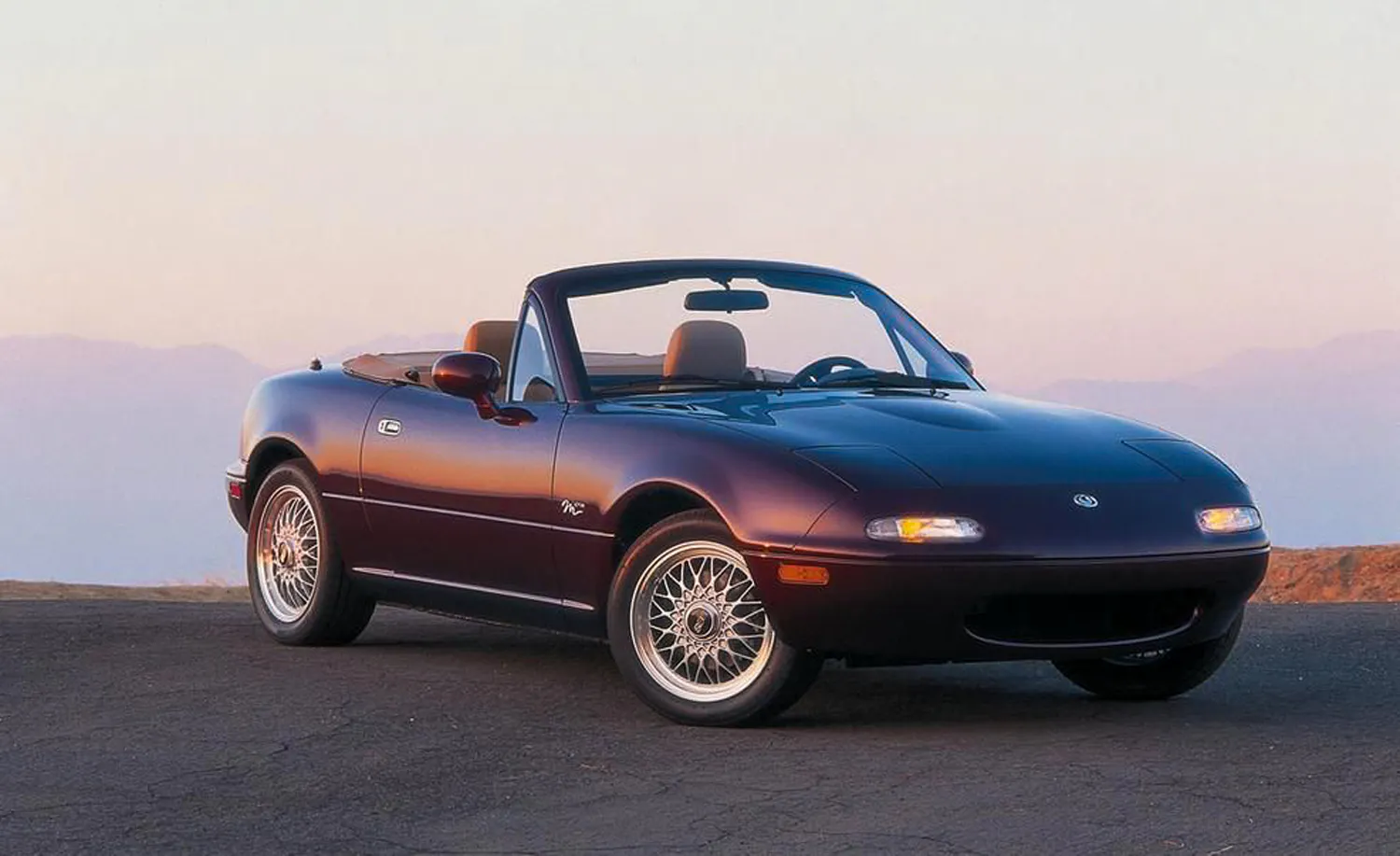
Under the hood, it's a contest between two lightweight engines. Cars from '90–93 came with a 1.6-liter four making 116 horsepower, while '94–97 models stepped up to a 1.8 producing 128 hp. On paper, the numbers favor the 1.8 slightly, and it does deliver a touch more grunt across the rev range, but the 1.6 comes alive more at the top end. If you're keeping your car in stock form, the difference isn't significant enough to make the 1.8 essential.
Both engines are tough and straightforward to maintain. Since they're non-interference designs, an over-rev from grabbing the wrong gear won't necessarily leave you with a costly repair bill. For those planning to chase more power through modifications, the 1.8 has an edge thanks to its larger, more robust differential. It's also worth pointing out that the 4.30:1 viscous limited-slip diff paired with the 1.6 is noticeably less durable than the 4.10 Torsen unit found on 1.8 cars, even under normal driving conditions. (That said, if you're just cruising around town, the limited-slip isn't something you'll really need.) The five-speed manual, offered from 1990 through 2005, shifts wonderfully, with only minor year-to-year variations that only a specialist would notice. An automatic was also available if you want or need one, but be aware it slows down a car that's already not quick—though it does come at a lower price point.
Mazda added extra chassis bracing in 1992, 1994, and once more in 1997, which helped cut down on cowl shake and overall flex. While some complain about the NA's creeping weight gain over the years, the fact that virtually every Miata racer hunts down factory braces—or stronger aftermarket versions where the rules allow—says these components more than earn their keep in added weight.
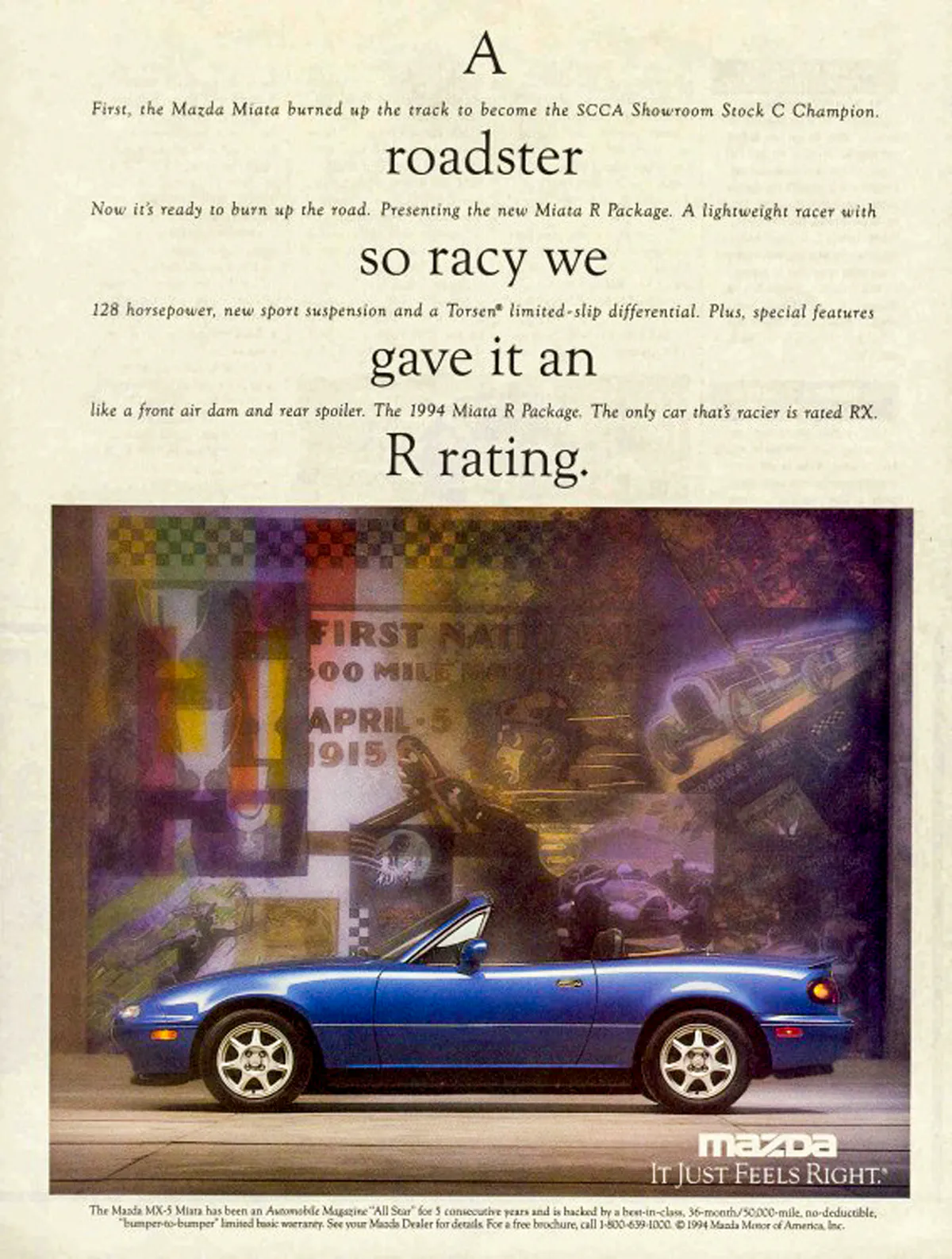
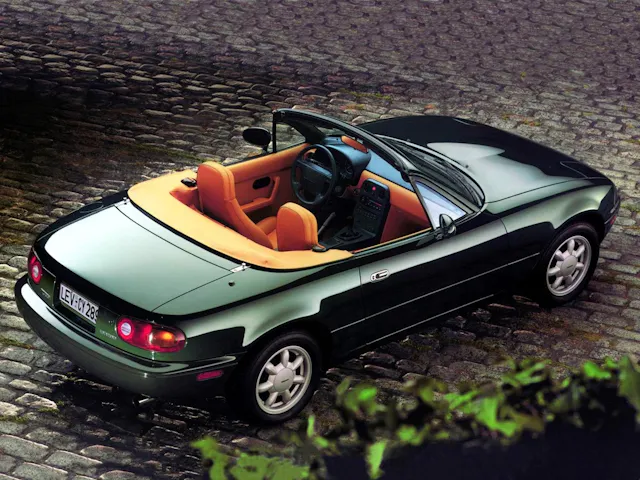
For those wanting something a bit more distinctive, Mazda has always excelled at rolling out special editions and enthusiast-focused packages. Premiums aren't always steep, though certain models—the '93 LE especially, along with any R Package car—can command real money when found in excellent shape, and tracking one down isn't always easy. The British Racing Green 1991 Special Edition is a standout, and so is the black-over-red '93 Limited Edition with its distinctive BBS wheels. Then came the M Edition in 1994, finished in Montego Blue, packed with extras, and featuring stainless door sills plus a Nardi wood shift knob and handbrake handle. By 1995, the M Edition had switched to a Merlot Mica finish and gained even more equipment, including cut-pile carpeting, a CD player, and ABS. At the opposite end of the spectrum sat the R Package, which brought Bilstein shocks, stiffer springs, firmer sway bars, unique tie rod ends, a limited-slip differential, and front and rear spoilers—all bolted to a car that came exclusively with cloth seats and manual steering.
Things to watch out for
The earliest 1.6-liter engines (1990–91) used a short-nose crankshaft that could suffer keyway wear if the timing belt wasn't replaced correctly. Translation: this can turn into a major engine repair, so ask to see timing belt service records and check specifically for any crank wobble. A radiator that's turned brown in color means it's due for replacement. Also inspect the top's condition, confirm the drains aren't clogged, and look for rust around the rocker panels just ahead of the rear wheels. Don't skip the suspension either—these cars spent years selling for as little as $2,000, which meant plenty of them ended up with cheap eBay parts, especially generic, no-name coilover kits. That said, spotting modifications shouldn't automatically worry you. Companies like Racing Beat, 949 Racing/Super Miata, and Flyin' Miata have spent years refining these cars and produce genuinely excellent parts.
NB (1999–2005): The Evolution
Overview
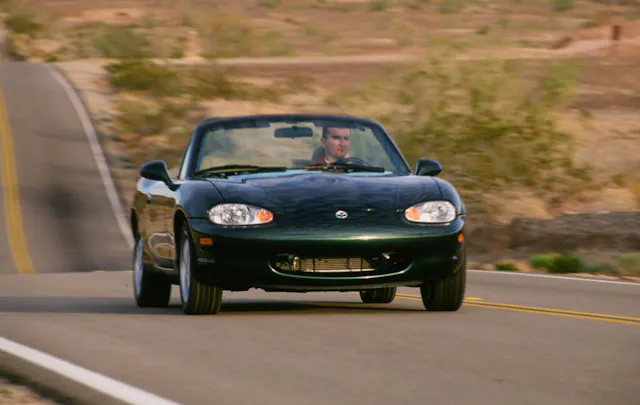
Debuting for the 1999 model year (Mazda skipped 1998 entirely in the U.S.), the redesigned Miata may look like a completely different car both inside and out compared to the NA, but underneath, it's fundamentally the same NA structure that's been substantially reworked. A rounder, more sculpted body with exposed headlights and a completely redone interior came paired with subtle suspension refinements and a fresh, better-breathing cylinder head for the 1.8-liter engine—all aimed at keeping the Miata competitive as the convertible market grew increasingly crowded.
As you'd expect, the NB feels like a more polished evolution rather than a departure, one that carries forward and builds upon everything that made the NA special. Producing 140 hp in 1999–2000 and 142 hp from 2001–05, and paired with more aggressive gearing than the 1.8-equipped NAs, naturally aspirated NBs still weren't fast by any measure, but they did pick up a noticeable dose of extra energy compared to their predecessor. Then there's the Mazdaspeed Miata, which brought a turbocharged engine good for 178 horsepower—putting bigger grins on faces and giving Mazda a factory-backed option for buyers who wanted more straight-line pace to go along with the Miata's already sharp handling. Plenty to appreciate here with this second generation.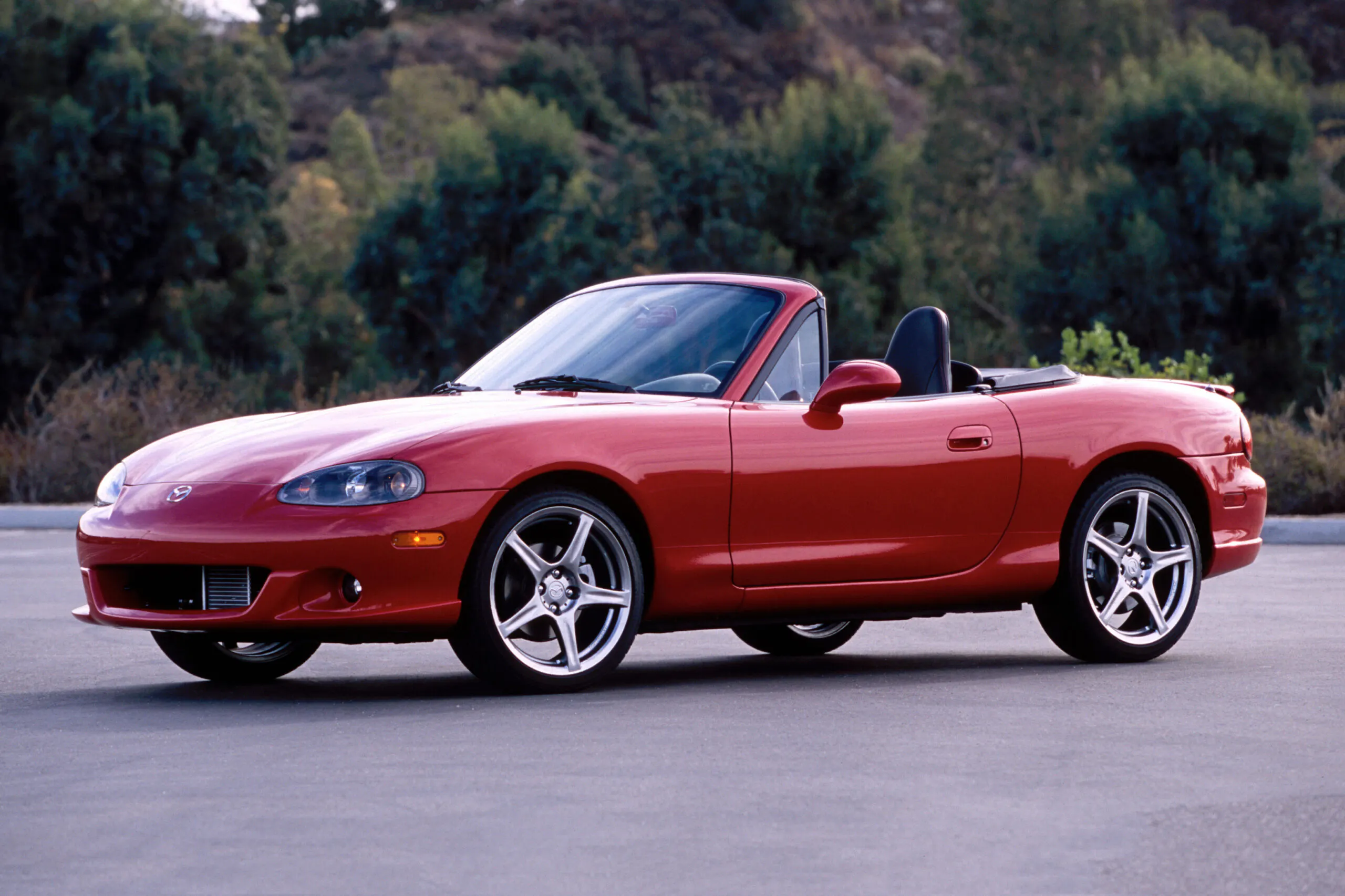
Here's a reworded version:
That said, the NB doesn't enjoy quite the same level of fame or recognition beyond Miata enthusiast circles that the NA does, and total production numbers were considerably lower (290,123 compared to 431,506 for the NA). As it gradually gains collector status, its values haven't climbed as fast as the NA's, though the two trends move in similar directions. The best examples out there sit around $26K ($31K for Mazdaspeed cars), trailing behind top NA prices, but decent driver-quality cars are priced roughly the same as their older counterparts. Roughly $10K buys a solid driver, with special editions and pristine condition commanding more.
Because of how technically similar they are, the NA and NB will always invite closer comparison to each other than to the later generations. Almost nobody is entirely neutral about styling preferences, but even if you are, there's still the question of whether you want the original—especially one as influential as the NA—or the more refined, later execution of the same idea. Given how dramatically things changed with the NC's arrival afterward, and how thoroughly modern the ND feels today, choosing between these two old-school Miatas isn't necessarily an obvious call. (Full disclosure: I've owned my 2000 NB since 2003.)
Things to think about
Certain special editions, like the 10th Anniversary models, do sell for somewhat more than a typical NB, though most other special editions mainly involve unique paint and minor trim tweaks, so the market doesn't attach much of a premium to them. Still, they offer a fun way to differentiate your car from the rest—British Racing Green made a comeback in 2002, and 2003 brought both a yellow Special Edition and a limited batch of just 50 Club Sport models. Prepare for a workout if you go with the latter, though: that stripped-down track special ditched power steering in favor of a manual rack and skipped air conditioning entirely.
1999 Mazda MX-5 Miata 10th Anniversary
Factory hardtops carry real value. Plenty have been snapped up by racers through the years, making clean examples genuinely hard to find. That said, if you don't see yourself actually using one, it might be worth passing on a car that comes with it and continuing your search elsewhere—separating a hardtop from its original car feels like a shame at this point, and honestly, they mostly just sit around taking up garage space. Worth noting: NAs and NBs share the same hardtop.
The Mazdaspeed Miata remains something of a hidden gem, still underappreciated outside dedicated Miata circles. If you're after something rare, genuinely quick, and full of that classic Zoom-Zoom spirit, it's worth checking out. You won't regret it.
Things to watch out for
Nearly everything covered in the NA section applies here too, minus the short-nose crank concern. One additional spot to check: the front frame rails, just ahead of the suspension arms, for rust. It's fixable, but repairs won't be cheap.
NC (2006–15): The All-Rounder

Here's a reworded version:
Overview
The NC ushered the Miata into the modern era. Bigger in nearly every dimension than the car before it, and sharing certain parts with its larger sibling, the RX-8, the NC catches plenty of criticism for supposedly straying from the Miata's original formula. I don't buy that argument. Having logged considerable time behind the wheel of the NC on both track and street, I can say firsthand that it manages to be almost as capable a daily driver as it is a genuinely excellent sports car, and that broader versatility doesn't come at the expense of its performance or its core identity.
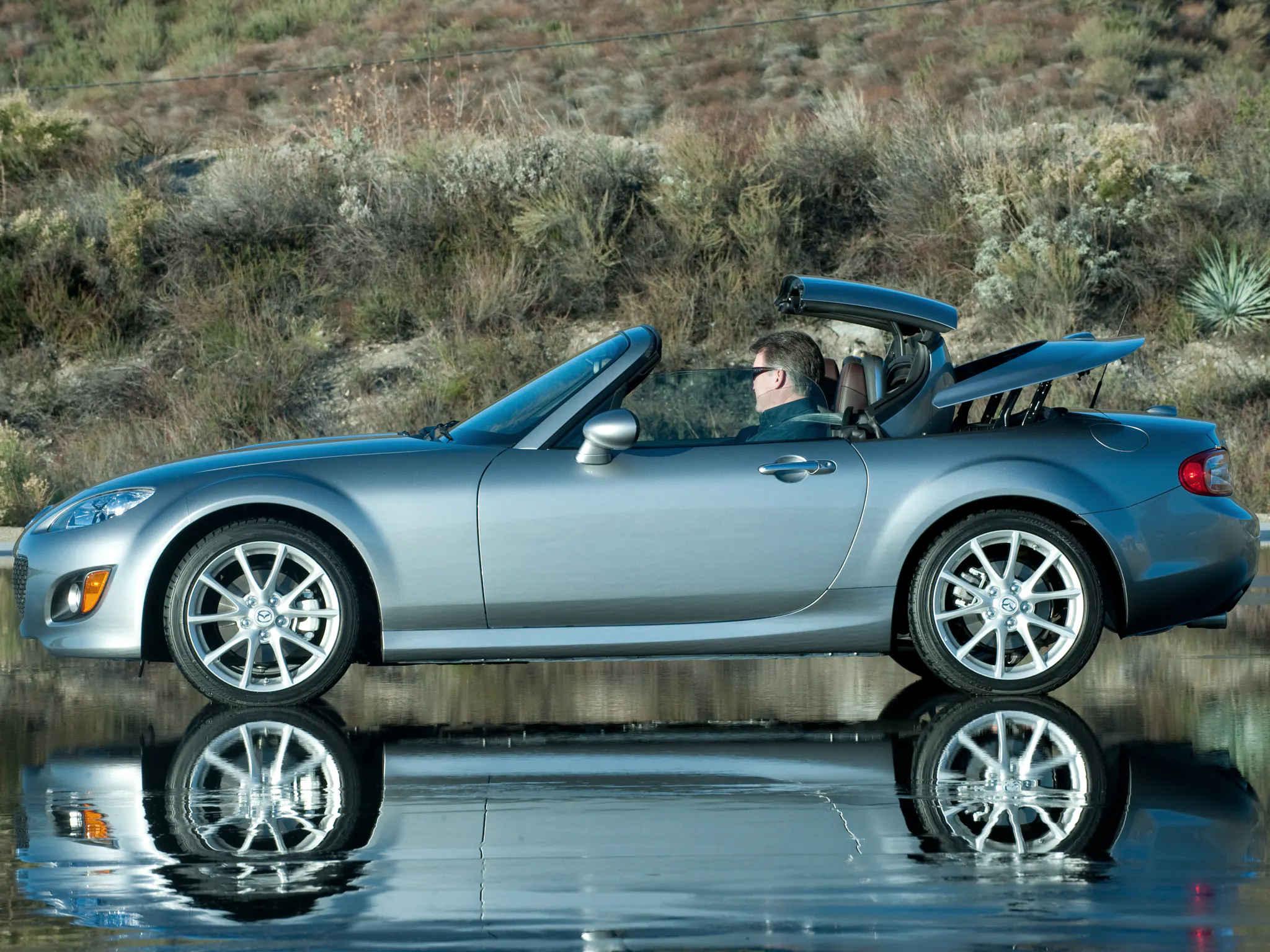
Setting aside the internet's "NC is a boat" jabs, this ground-up redesign delivered a noticeably nicer interior in terms of material quality, styling that nodded back to the original NA dashboard, and more interior space overall. It also introduced, via a 2.0-liter, 170-hp engine, the strongest naturally aspirated powerplant the Miata had seen up to that point. An extra 2.5 inches of wheelbase and 1.5 inches of width gave the car greater stability. And when the Power Retractable Hard Top (PRHT) arrived in 2007 as an alternative to the soft top, it gave Miata owners their first chance at an easily stowable hard roof.
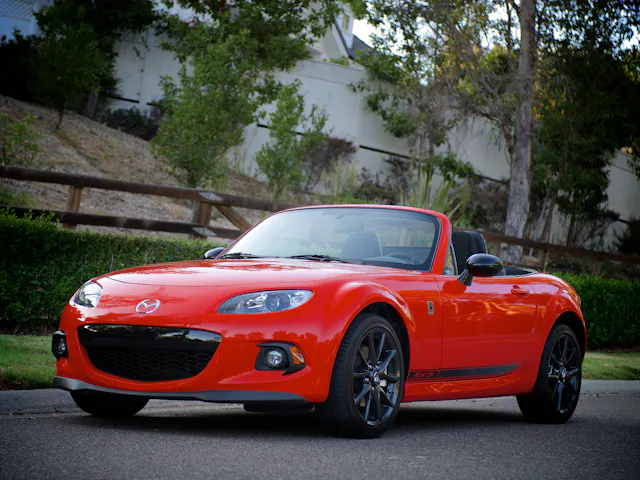
So how does it drive? The NC's limits sit higher than those of earlier generations, though it still carries a fair bit of body roll. Its larger footprint and multilink rear suspension add stability but come at the cost of some of the sharpness found in earlier cars, even though you're now capable of higher speeds. That said, the friendly, approachable nature that defines the Miata lineage is still very much intact, and the NC represents a real step forward for everyday cruising—which, let's be honest, is how most owners spend the majority of their time behind the wheel anyway.
Enthusiasm for the NC appears to be growing over time. Interest has been climbing—Hagerty quote requests from NC owners have risen 57% since 2022, compared to a 40% increase for NA owners over that same span. As a future collector car, the NC still hasn't fully found its footing: the earliest examples have bottomed out and started climbing in value, while the newest ones, from 2015, haven't yet hit the bottom of their depreciation curve. Budget mid-teens for a good driver-quality example, and low $20Ks for a truly excellent one, particularly a PRHT or Club Spec model.

Things to think about
The NC's drivetrain stayed fairly consistent throughout its long production run (though it's worth noting the 2.0-liter received beefed-up internals and a marginally higher redline starting in 2009—good news if you're considering adding a turbo or supercharger down the line). That means your main decision comes down to one of three transmissions: a five- or six-speed manual, either of which handles the job well, or a six-speed automatic that, thanks partly to the NC's extra power, finally freed automatic Miatas from their old reputation as sluggish and joyless. Limited-slip differentials remained available as well, and they're a smart choice for anyone planning to drive with any enthusiasm.
Fond of cars with a cheerful "face"? Then look at Miatas built between 2009 and 2015. Mazda's lineup during that stretch—the 3, RX-8, and Miata among them—all wore a friendly, smiling front-end design that might have felt a bit over-the-top at the time but stands out as a refreshing change from today's more aggressive, scowling car designs. Before 2009, the NC had a more understated front end inspired by the 2003 Ibuki concept car. The 2009 refresh also brought numerous other styling updates and added comfort features, so if you prefer a more well-equipped car, that later era is worth a closer look.
Ever since the Miata first launched, a significant chunk of its fan base has pushed for a proper coupe version. Concept cars during the NA and NB eras hinted at the idea, but it wasn't until the PRHT debuted in 2007 that Mazda proved just how popular a "real" hardtop could be. Despite the added weight, the PRHT sold strongly and still fetches a premium on the used market today.
Just like previous generations, Mazda rolled out numerous special editions throughout the NC's run. Most of these amounted to unique colors and trim packages without any real impact on how the car drove. The Club Spec, however, is a notable exception—it returned in 2013 with sport-tuned suspension (itself a worthwhile upgrade on base models), a limited-slip differential, 17-inch wheels, and a handful of exterior touches. As I've written about in more detail elsewhere on the NC, if you're shopping this generation and lean toward the sportier side, the Club Spec deserves serious consideration.
Things to watch out for
NCs are about as dependable as cars come. Confirming regular maintenance is still worthwhile, but there's no glaring weak point to be wary of with this generation. As with the NA and NB, check the age and condition of the cooling system. Also verify the top's drainage channels are clear of debris, and inspect the carpets for any signs of dampness. If you're considering a PRHT model specifically, make sure the retractable roof mechanism operates smoothly.
ND (2016–Present): Modern Take

Overview
Widely praised as a return to what made the Miata great, the ND tightened up characteristics that many enthusiasts felt had loosened in the NC generation. Weight, wheelbase, and overall length were all trimmed down, and its sharper, more purposeful styling stands in clear contrast to the softer, Ibuki-inspired look of the NC before it.
The comparisons to the original NA went beyond simply praising the car for not being an NC: it genuinely felt more energetic than its predecessor while still preserving the forgiving handling and characteristic body roll that have always defined the Miata experience. That's a striking choice in an era dominated by grippy tire compounds and stiff suspension setups. Another nod to the past came in the engine department: the 2.0-liter SkyActiv four-cylinder that debuted the ND made 155 horsepower, actually 15 less than the outgoing NC's engine. This tracked with the Miata's longstanding philosophy of prioritizing chassis dynamics over raw power. Even with less output, 0–60 mph times dipped into the high five-second range—not blazing fast, but enough that the Miata's straight-line pace finally matched its cornering ability.
The one carryover feature from the NC was the availability of a hard roof. Rebranded as the RF (Retractable Fastback), it's been part of the lineup since 2017.
The biggest change for the ND2, which arrived in 2019, happened under the hood. The 2.0-liter received a thorough refresh, with both internal and external upgrades pushing output to a solid 181 horsepower and raising the redline by 800 rpm to 7,500. Performance naturally improved, but the more significant development was that the Miata finally had an engine that loved to rev and didn't need any excuses made for it.
At its core, the ND is a genuine, technologically current reinterpretation of the Miata formula. It hasn't reached classic status yet, but it holds true to the spirit that longtime fans value, and aside from the very earliest examples, most still carry a warranty. These cars are now genuinely quick, remain just as capable of putting a smile on your face, and they'll even sync up with your phone. Hagerty doesn't yet track them in the Price Guide, but early examples with moderate mileage in solid condition can be found in the mid-to-high teens, while brand-new ones can run past $40K.
Things to think about
Since these cars are still losing value over time, age plays a significant role in what they're worth. That said, given how much acclaim the ND2's upgraded engine has received, the ND1 is likely to remain the better bargain among NDs for anyone who isn't chasing outright speed or a high-revving engine.
A Brembo/BBS package was offered right from launch, and although plenty of forum discussion suggests the brake upgrade isn't a dramatic improvement over stock, both the brakes and the lightweight 17-inch wheels make for a visually appealing option. A second package followed in 2018, pairing those same wheels and brakes with Recaro seats.
The ND lineup breaks down into three trims: Sport, Club, and Grand Touring. While the Sport trim could be optioned toward a sportier build, the Club trim offered the simplest way to get performance extras like stiffer springs, Bilstein shocks, and a limited-slip differential all bundled together.
Things to watch out for
Like the generations before it, the ND is a fundamentally solid, well-built car. The one area that deserves real scrutiny, though, is the manual gearbox. Aggressive driving can push these toward eventual failure, so make sure it shifts cleanly—particularly between second and fourth gears—and listen for any excessive whining. There have also been some reports about the paint being prone to chipping, so if that's a concern, a protective film may be worth considering.